
In a world where 5G promises lightning-fast downloads and seamless streaming, it might feel like a crime to consider turning it off. But what if that high-speed connection is wreaking havoc on your battery life or causing unexpected slowdowns? Fear not, iPhone users! There’s a way to hit the brakes on that 5G rocket ship.
Whether you’re trying to save some juice for that epic TikTok binge or simply want to dodge those pesky “5G is available” notifications, knowing how to turn 5G off could be your new favorite power move. Let’s dive into the nitty-gritty and discover just how easy it is to take control of your iPhone’s connectivity. After all, sometimes less really is more, especially when it comes to your phone’s performance.
Understanding 5G Technology
5G technology represents the fifth generation of wireless connectivity. It enhances speed and capacity, increasing the ability to connect more devices simultaneously.
What Is 5G?
5G stands for fifth generation and replaces previous mobile networks. This technology offers faster download and upload speeds compared to 4G. Significant latency reduction improves the responsiveness of applications. Additionally, 5G operates on multiple frequency bands, which allows it to perform well in crowded areas. Its architecture supports millions of connected devices, enabling the Internet of Things (IoT) to flourish.
Benefits of 5G Connectivity
5G connectivity introduces several advantages for users. Enhanced speed allows for seamless streaming of high-definition content. Lower latency improves online gaming and real-time applications. This generation of technology supports a higher number of devices without compromising performance. Moreover, improved reliability ensures stronger connections even in busy locations. Benefits extend to various sectors such as healthcare, education, and transportation, transforming how these industries operate.
How to Toggle 5G on iPhone
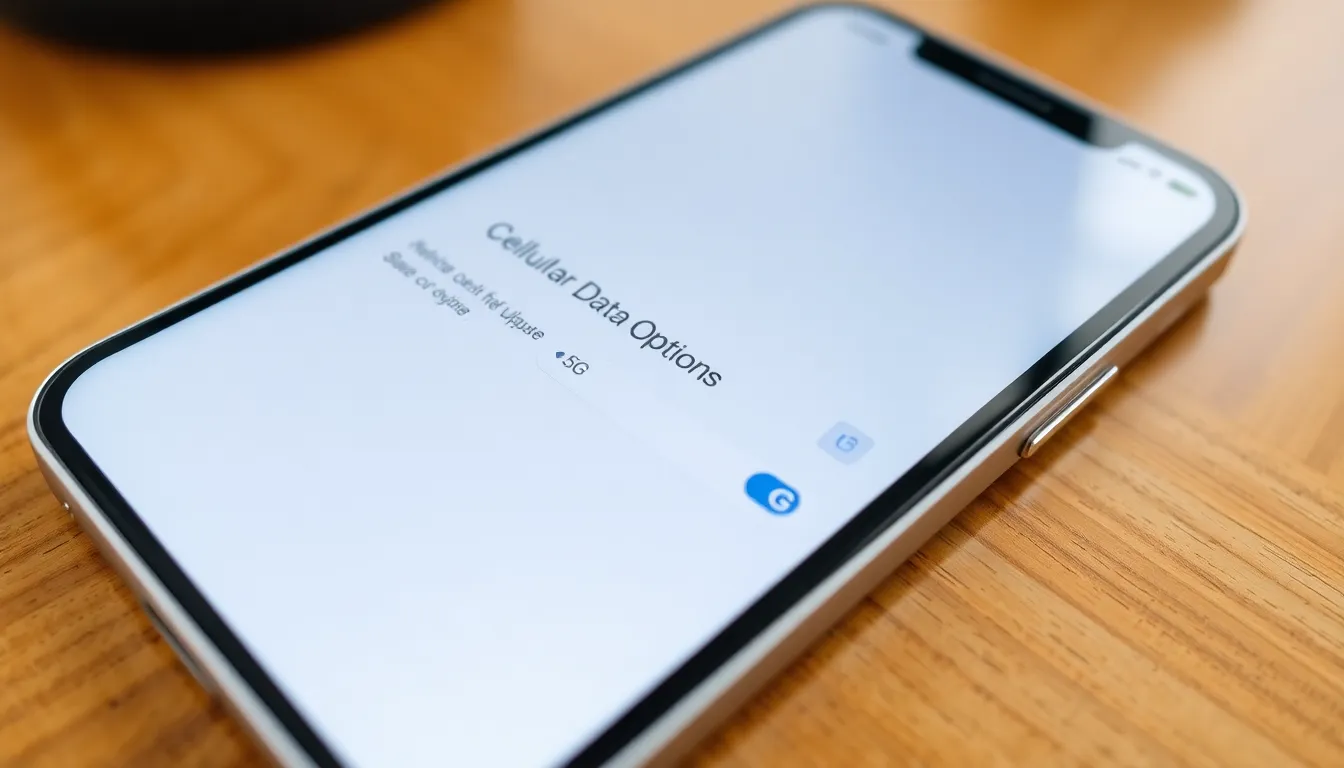
Toggling 5G off on an iPhone involves a few simple steps in the settings. Adjusting this setting can significantly enhance the device’s performance and battery life.
Accessing Settings
Begin by locating the Settings app on the iPhone’s home screen. Tap on the app icon to open it. Next, scroll down and find Cellular, then select it. This section contains all cellular network settings. Within Cellular, tap on Cellular Data Options to access further options regarding network types.
Turning Off 5G
Select Voice and Data from the Cellular Data Options section. Three options appear: 5G On, 5G Auto, and LTE. Opt for LTE to disable 5G. This action reduces data consumption and potentially preserves battery life. Saving these changes requires no additional steps, as selections automatically adjust the network settings.
Reasons to Turn Off 5G
Turning off 5G can enhance the iPhone user experience. The benefits range from saving battery life to alleviating connectivity issues.
Battery Life Considerations
5G connectivity consumes more battery compared to 4G. Users may notice battery drains increasing with 5G active, especially with heavy data usage. Testing matches findings from various sources, showing that 5G may reduce battery life by up to 20%. Consequently, disabling 5G often leads to longer device usage between charges. Maintaining LTE instead creates a more efficient energy consumption pattern. Those who find their devices often low on battery might consider turning off 5G to prolong usage.
Connectivity Issues
5G can cause connectivity issues in certain environments. In areas with weak signals, users may experience slower speeds and dropped connections. Transitioning between 5G and 4G adds to interruptions when traveling or moving between locations. Reliability remains a critical factor, as 4G often provides steadier connections where 5G coverage is insufficient. Users facing frequent disconnections might opt to switch off 5G, reverting to a more stable and consistent network experience.
Troubleshooting 5G Settings
Troubleshooting 5G settings on an iPhone can enhance the user experience. Users may encounter various issues that can affect performance and connectivity.
Common Problems
Slow speeds often occur with 5G, particularly in areas with weak signals. Battery drain presents another significant concern, as 5G can reduce battery life by up to 20%. Users might also face frequent disconnections when their devices switch between 5G and 4G networks. Notifications for network status changes can lead to frustration. Additionally, crowded areas may hinder 5G performance, as the technology struggles to provide stable connections to multiple users simultaneously.
Solutions and Tips
Adjusting settings can alleviate many of these problems. First, turning off 5G in the Cellular settings improves battery life and simplifies connectivity. Users can prefer LTE for reliable performance in low-signal areas. Limiting background app refresh further preserves battery. Resetting network settings might solve persistent issues with connectivity. Lastly, keeping the device updated ensures optimal performance and security. Following these tips helps users maximize their data experience while using an iPhone.
Turning off 5G on an iPhone can significantly enhance the user experience. By disabling this feature users can preserve battery life and improve connectivity in areas with weak signals. While 5G offers impressive speed and reliability it may not always be the best option for every situation.
With a simple adjustment in the settings users can switch to LTE and enjoy a more stable connection. This change not only helps in saving battery but also reduces the frequency of disconnections. Ultimately each user can decide what’s best for their needs balancing performance with connectivity preferences.