

Ever find yourself staring blankly at your iPhone, wondering where on earth those elusive saved passwords are hiding? You’re not alone. With countless apps and websites requiring logins, it’s easy to forget which password goes where. Fortunately, Apple’s got your back.
Understanding Saved Passwords on iPhone
Users can streamline their online experience by effectively managing saved passwords on their iPhones. Understanding how to locate and utilize these passwords simplifies access to various apps and websites.
Importance of Managing Passwords
Managing passwords on an iPhone helps ensure security and convenience. It reduces the risk of forgotten login details, maintaining seamless access to accounts. Password management prevents reliance on weak or reused passwords, enhancing overall security protocols. Utilizing features like auto-fill also saves time when logging into websites. Organizing passwords allows for easier updates and stronger password choices.
How Password Storage Works
iPhones store passwords securely within the device’s Keychain. Keychain encrypts password data, providing protection against unauthorized access. Users can retrieve passwords from the Settings app under Passwords, enabling quick management. The system saves passwords automatically when users log in to apps or websites through Safari. Synchronization with iCloud ensures access across multiple Apple devices, enhancing user convenience.
Locating Saved Passwords on iPhone
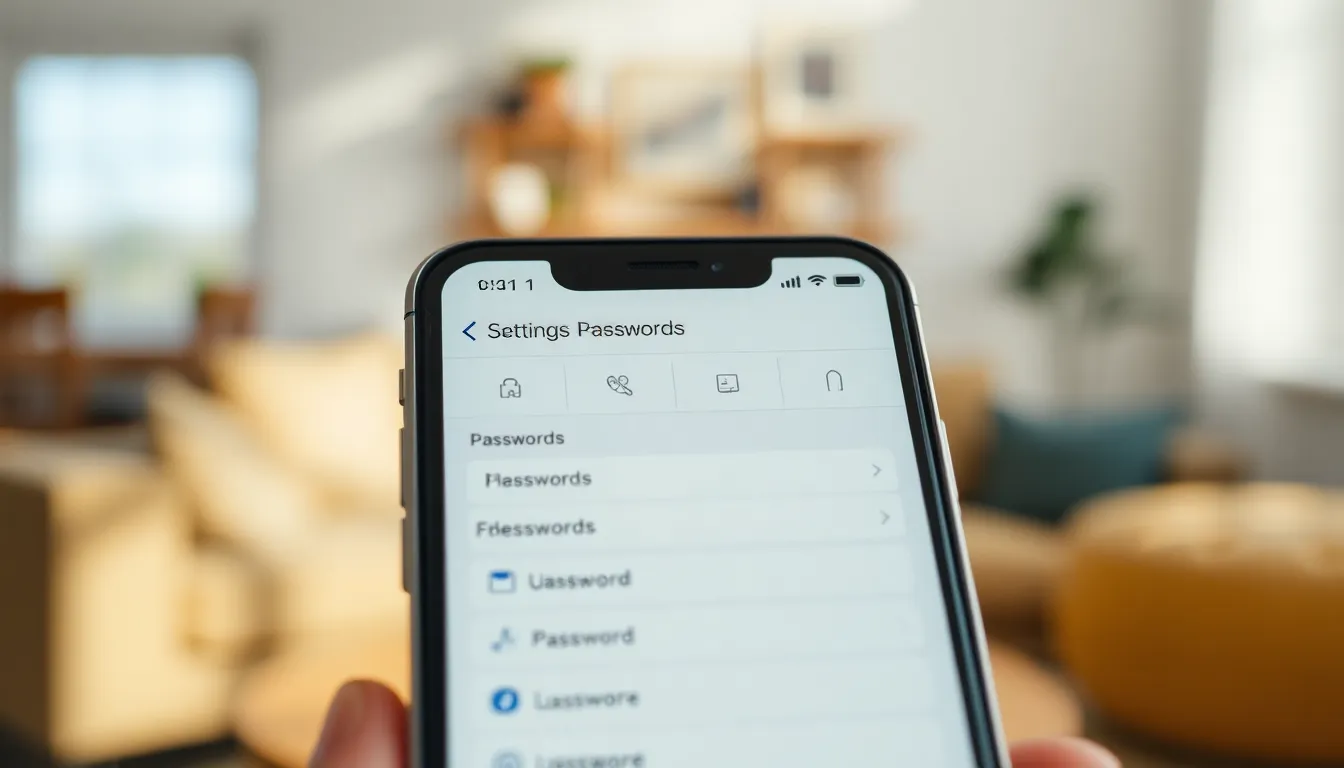
Finding saved passwords on an iPhone is straightforward. Apple designed the process to facilitate password management easily.
Using the Settings App
Open the Settings app to view saved passwords. Scroll down and select “Passwords” to access them. Users must authenticate with Face ID or Touch ID for security. Once inside, a list of saved passwords appears. Each entry displays the website name alongside the saved username. Tapping on an entry shows the password, which can be copied or edited. This method allows effective management and organization of login credentials.
Accessing Passwords Through Safari
Safari offers quick access to saved passwords as well. While on a login page, the browser automatically prompts users with saved credentials. Tapping the username field reveals possible login options stored in Keychain. Selecting a saved login fills in the fields for convenience. Users can manage their passwords directly in Safari settings. Navigating to “Settings,” then “Safari,” provides additional security settings and options for autofill. This integration streamlines the login process across various websites.
Viewing and Managing Passwords
Users can easily view and manage saved passwords on their iPhones to ensure security and convenience. Through the Settings app, all stored passwords are accessible with just a few taps.
Editing Saved Passwords
To edit saved passwords, users need to open the Settings app and navigate to Passwords. After authenticating with Face ID or Touch ID, a list shows all saved passwords. Selecting a specific entry reveals options for editing, including changing usernames or passwords. Users can alter login credentials to strengthen security or update outdated information. Saved changes automatically sync across devices when using iCloud, maintaining consistency across the user’s Apple ecosystem.
Deleting Unwanted Passwords
Deleting unwanted passwords is straightforward. Users should access the Passwords section in Settings and authenticate their identity. Tapping on the password entry opens additional options, including the delete function. By selecting delete, an unwanted password is removed permanently from the device. This process helps streamline password management and reduces clutter, allowing easier access to important credentials. Regularly updating and removing outdated entries contributes to stronger security practices.
Tips for Secure Password Management
Managing passwords securely is crucial for protecting personal information. Users can easily enhance their security by implementing two-factor authentication and using a password manager.
Enabling Two-Factor Authentication
Two-factor authentication offers an extra layer of security for Apple ID accounts. This feature requires a verification code sent to a trusted device whenever a login attempt occurs. Enabling this feature helps ensure that even if someone obtains a password, they cannot access the account without the second factor. Users can activate two-factor authentication through their Apple ID settings. Regularly updating trusted devices is recommended to maintain security efficiency.
Using a Password Manager
A password manager simplifies password storage and management while enhancing security. With a password manager, users can generate strong, unique passwords for each account. Keeping track of these passwords becomes hassle-free, as the manager securely encrypts and stores them. Many password managers sync across devices, making it easy to access information anywhere. Opting for a reputable password manager can significantly reduce the risk of accounts being compromised due to weak or reused passwords.
Managing saved passwords on an iPhone doesn’t have to be a hassle. With the built-in Keychain feature users can easily access and control their passwords while benefiting from enhanced security. By taking advantage of the Settings app users can quickly retrieve, edit, or delete saved credentials to keep their information organized and secure.
Regularly updating passwords and utilizing two-factor authentication are essential practices for maintaining account safety. For those looking for an even more streamlined experience a password manager can be a valuable tool. By implementing these strategies users can confidently navigate their online accounts without the stress of forgotten login details.